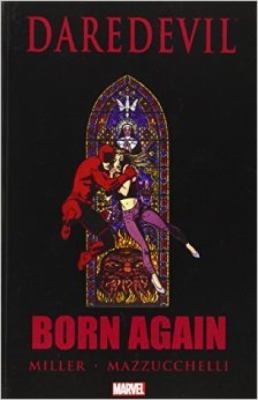
If you want to know where to start reading Daredevil comics, start with Daredevil: Born Again by Frank Miller and David Mazzucchelli, or the five-issue origin miniseries Daredevil: The Man Without Fear. You do not need to read sixty years of back issues starting in 1964. Daredevil boasts the most consistently high-quality creative runs in superhero history. Whether you prefer gritty street crime noir, intense courtroom drama, or classic swashbuckling acrobatics, choosing the right starting run depends on your personal storytelling taste.
This guide breaks down the four premier jumping-on points, compares their tone and commitment level, and connects the comics directly to the live-action screen.
Where to Start Reading Daredevil Comics: The Quick Verdict
Matt Murdock debuted in Daredevil #1 in April 1964, created by Stan Lee and Bill Everett with design contributions from Jack Kirby. As a boy in Hell's Kitchen, Matt saved a blind pedestrian from an oncoming truck carrying radioactive waste. A falling canister struck his face, blinding him while mutating his remaining senses into superhuman radar-like awareness. After crooked promoter the Fixer murdered his father, prizefighter "Battlin' Jack" Murdock, for refusing to throw a prizefight, Matt dedicated his life to justice as both an attorney and a vigilante.
While 1960s issues introduce his classic radar sense and rogues like Stilt-Man and the Owl, modern readers should skip the Silver Age. The character we recognize today was forged in 1981 when Frank Miller took creative control.
Here is the quick roadmap:
- For the all-time masterpiece: Read Daredevil: Born Again (issues #227–233).
- For a cinematic crime thriller like the TV show: Start with Brian Michael Bendis and Alex Maleev (Daredevil Vol. 2 #26).
- For a colorful, swashbuckling adventure: Start with Mark Waid (Daredevil Vol. 3 #1).
- For modern Catholic guilt, morality, and Mayor Fisk: Start with Chip Zdarsky (Daredevil Vol. 6 #1).
If you are expanding your collection after reading our first 10 comics guide or our breakdown of the best Doctor Doom comics to read, Daredevil represents Marvel street-level storytelling at its absolute peak.
The Tragic Foundation: Frank Miller and Born Again
Frank Miller joined as penciler on Daredevil #158 in May 1979 alongside writer Roger McKenzie. With Daredevil #168 in January 1981, Miller assumed full writing duties, transforming the struggling title into an industry powerhouse.
Miller introduced Elektra Natchios, Matt's college sweetheart turned assassin. He established the mystical ninja clan The Hand, their noble rivals The Chaste, and Matt's blind martial arts mentor, Stick. Miller also appropriated Spider-Man villain Wilson Fisk, The Kingpin, establishing him as Daredevil's supreme nemesis.
Miller's masterwork arrived in 1986 with Daredevil: Born Again spanning issues #227 to #233, illustrated by David Mazzucchelli. Former legal secretary Karen Page sells Matt Murdock's secret identity for heroin in Mexico. The information reaches Kingpin, who methodically dismantles Matt's life without throwing a punch. Kingpin freezes Matt's bank accounts, forecloses his home, has his law license revoked through fabricated perjury charges, and firebombs his brownstone. Broken and paranoid, Matt descends into madness before clawing his way back to spiritual redemption.
Born Again remains the benchmark against which all superhero graphic novels are measured.
The Modern Crime Noir: Brian Michael Bendis and Alex Maleev
In November 1998, Marvel launched the Marvel Knights imprint with Daredevil Vol. 2 #1, written by Kevin Smith with art by Joe Quesada. Following Smith's "Guardian Devil" arc, writer Brian Michael Bendis and artist Alex Maleev took over full-time with issue #26 in 2001, producing a celebrated run that won the 2003 Eisner Award for Best Continuing Series.
Maleev's photo-referenced, textured, murky art gave Hell's Kitchen a claustrophobic weight that mirrored prestige television. Bendis focused on legal procedure, tabloid media, and the psychological toll of a double life.
The defining narrative turn occurs early: a tabloid leaks Matt Murdock's secret identity on the front page of the Daily Globe. Rather than resetting status quo with a magic memory wipe, Bendis explored the fallout. Matt sues the paper for defamation while patrolling under intense FBI surveillance. The run builds toward Matt beating Kingpin half to death in a crowded bar and declaring himself the new Kingpin of Hell's Kitchen.
Ed Brubaker and artist Michael Lark picked up immediately at issue #82 in 2006, opening with Matt locked inside Ryker's Island alongside his greatest enemies. If you love the pacing of the Netflix show, Bendis and Brubaker are the closest comic equivalent.
The Swashbuckling Rebirth: Mark Waid and Chris Samnee
After decades of grim tragedy, writer Mark Waid, alongside artists Paolo Rivera, Marcos Martin, and Chris Samnee, launched Daredevil Vol. 3 #1 in July 2011. Waid recognized that Matt Murdock had endured so many nervous breakdowns that another dark spiral would feel exhausted.
Waid steered the character back toward the acrobatics of his Silver Age roots. Matt returns to private practice with Foggy Nelson, smiling in brightly lit courtrooms and utilizing visual radar tricks to outmaneuver foes.
Yet Waid's run never ignores trauma. Matt's swashbuckling joy is a deliberate survival tactic: he chooses optimism because giving in to darkness will destroy him. The run won three Eisner Awards in 2012, making it the premier entry point for readers who dislike unrelenting grime.
The Gritty Redemptive Arc: Chip Zdarsky and Marco Checchetto
For readers wanting a modern run leading directly into current Marvel publishing, start with writer Chip Zdarsky and artist Marco Checchetto on Daredevil Vol. 6 #1 from February 2019.
Zdarsky strips Matt of his armor in issue #1. Returning to patrol while concussed, Daredevil accidentally causes the death of petty robber Leo Carraro during a convenience store holdup. Matt must confront manslaughter charges in court while wrestling with religious guilt and the moral validity of vigilantism.
Meanwhile, Wilson Fisk serves as Mayor of New York City, outlawing masked vigilantes through municipal law and using police task forces against them. Zdarsky's run is collected in collections like the Daredevil by Chip Zdarsky Box Set and culminated in the Devil's Reign crossover event.
The Definitive Origin Story: The Man Without Fear
If you prefer a tight five-issue origin before tackling ongoing series, read Daredevil: The Man Without Fear (October 1993 to February 1994).
Written by Frank Miller with pencils by John Romita Jr. and inks by Al Williamson, the miniseries modernizes Matt's childhood, his relationship with his father, and his training under Stick. It also introduces the makeshift black cloth mask, black compression shirt, and combat boots adapted by costume designer Stephanie Maslansky for television.
The story moves swiftly, captures Matt's raw vulnerability, and establishes his complex dynamic with Elektra during their Columbia University days. It remains the cleanest one-stop origin on the shelf.
Connecting the Comics to Daredevil: Born Again on Screen
The live-action series Daredevil: Born Again is not a page-for-page reprint of Frank Miller's 1986 story. The show synthesizes two distinct comic eras:
- Frank Miller's Born Again: Inspires the psychological feud with Wilson Fisk, Matt's Catholic roots, and the return of Karen Page and Foggy Nelson.
- Chip Zdarsky's Mayor Fisk Arc: Inspires the institutional power dynamic, with Kingpin utilizing mayoral authority and anti-vigilante legislation to corner urban vigilantes.
Reading either run provides an immediate roadmap to the conflicts fueling the screen adaptation. For broader Marvel storylines and how street-level heroes cross paths with cosmic crises, see our Avengers: Doomsday guide.
FAQ
What is the single best Daredevil comic for a complete beginner?
Start with Daredevil: Born Again (issues #227–233) or the five-issue origin miniseries Daredevil: The Man Without Fear. Both are self-contained graphic novels written by Frank Miller that define Matt Murdock's soul without requiring sixty years of back issues.
Do I need to start reading Daredevil from issue 1 in 1964?
No. The 1960s Silver Age issues by Stan Lee and Bill Everett are fun historical artifacts, but modern Daredevil was forged in 1981 when Frank Miller took over with issue #168. You can skip the first 150 issues entirely.
Which Daredevil run feels most like the live-action TV series?
The Brian Michael Bendis and Alex Maleev run (Daredevil Vol. 2 #26–81) and the Chip Zdarsky run (Daredevil Vol. 6 #1–36). Both feature street-level noir, courtroom tension, and brutal psychological standoffs with Wilson Fisk.
What order should I read Frank Miller's Daredevil comics in?
Read Daredevil: The Man Without Fear #1–5 first for the modernized origin, followed by Miller's classic run (Daredevil #168–191), and finish with the masterwork Daredevil: Born Again (#227–233).
Is Mark Waid's Daredevil run worth reading if I like dark stories?
Yes. While visually brighter on the surface, Waid uses Matt's optimism as a conscious psychological defense against chronic depression and trauma. It won three Eisner Awards in 2012 and delivers exceptional character drama.
Sources
- Marvel Entertainment official Daredevil character history and reading guides (marvel.com)
- Comic Book Herald complete Daredevil reading order by Dave Buesing (comicbookherald.com)
- Overstreet Comic Book Price Guide issue details and publication chronologies
- Grand Comics Database (GCD) records for Daredevil #1 (1964), #158 (1979), #168 (1981), #227-233 (1986), and Vol. 2-6
 Daredevil by Chip Zdarsky Box Set