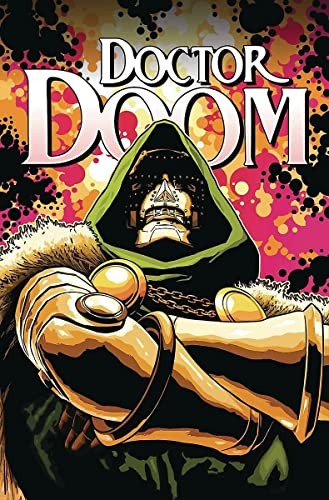
If you want the best doctor doom comics to read, you are not looking for a single issue or a dusty back issue. You are looking for a through-line: an arrogant boy from the Roma plains of Latveria who becomes the greatest sorcerer-scientist on Earth, the most fearsome monarch in the Marvel Universe, and occasionally a hero wearing iron armor. Doctor Doom is the rare villain who can seize omnipotent cosmic power and still lose to his own colossal pride. This guide ranks the essential Doom stories by narrative impact, character depth, and comic history.
The First Face of Doom: Why Fantastic Four #5 (1962) Still Matters
Fantastic Four #5 — cover-dated July 1962, by Stan Lee and Jack Kirby — is where Victor von Doom arrives. He kidnaps Sue Storm (the Invisible Girl) and forces the Fantastic Four to travel back in time to retrieve Blackbeard's treasure. That simple plot establishes everything: a villain who treats time and history as weapons, views people as tools, and wears an iron mask to hide his scarred vanity.
The landmark issue is preserved in Fantastic Four #5 (1962) — The debut issue and classic omnibus editions. It remains required reading for anyone tracing Marvel's premier antagonist back to his comic roots.
The Origin Reconsidered: Fantastic Four Annual #2 (1964) to Books of Doom
Doom's canonical origin was first unveiled in Fantastic Four Annual #2 (1964) by Stan Lee, Jack Kirby, Chic Stone, and Sam Rosen. The annual established his college rivalry with Reed Richards, his ill-fated machine built to rescue his mother from hell, his scarred visage, and his rise as Latveria's sovereign. The origin appears in Fantastic Four Annual #2 (1964) — The origin.
The definitive modern exploration is Doctor Doom: Books of Doom, the acclaimed 2005–2006 six-issue limited series by Ed Brubaker and Pablo Raimondi. Brubaker portrays Victor's impoverished childhood, his mother Cynthia's pact with Mephisto, and his relentless drive toward mastery. If you read only one origin story, this is the gold standard.
Triumph and Torment: The 1989 Graphic Novel That Defined Doom's Soul
Published as Marvel Graphic Novel #49 in 1989, Doctor Strange & Doctor Doom: Triumph and Torment is written by Roger Stern, penciled by Mike Mignola, and inked by Mark Badger.
The story pairs Doom with Doctor Strange in a tournament of mystics, leading Doom to descend directly into Mephisto's infernal realm to bargain for his mother's damned soul. Mignola's atmospheric gothic artwork and Stern's poignant characterization reveal the noble tragedy beneath the armor. It remains one of the greatest standalone graphic novels Marvel has ever published.
When Doom Won: Emperor Doom and the Philosophy of Total Rule
In Marvel Graphic Novel #27: Avengers Emperor Doom (1987), written by David Michelinie and illustrated by Bob Hall, Doom achieves what every other supervillain fails to do: he conquers the world.
By harnessing the mind-controlling frequency of Zebediah Killgrave (the Purple Man) through a global Psycho-Prism, Doom establishes universal peace, eliminates hunger, and outlaws war. The psychological brilliance of the story is Doom's ultimate boredom with total obedience. It is an indispensable character study of tyranny and absolute will.
Secret Wars and God Emperor Doom: The 2015 Event That Changed Everything
Jonathan Hickman and Esad Ribić's nine-issue epic Secret Wars (2015) is the crowning achievement of modern Marvel event storytelling. When universal Incursions destroy both Earth-616 and the Ultimate Universe (Earth-1610), Doom steals the power of the Beyonders and crafts Battleworld from the remnants of reality.
Reigning as God Emperor Doom with Stephen Strange as his sheriff and Susan Storm as his queen, Doom achieves godhood — yet remains haunted by his inferiority to Reed Richards. Avengers: Doomsday HQ covers how this storyline directly inspires Marvel Studios' Phase Six climax. You can experience the complete saga in Secret Wars (2015) by Jonathan Hickman — Trade Paperback or Omnibus.
Doom Beyond the Fantastic Four: Iron Man, Strange, and the Cosmic Scale
Doom's greatest confrontations often extend far beyond the Fantastic Four. In Fantastic Four #57–58, Lee and Kirby orchestrate one of comic history's boldest moves: Doom tricks the Silver Surfer, strips him of the Power Cosmic, and roams the globe as an invincible cosmic demigod.
In the classic "Doomquest" storyline (Iron Man #149–150, 1981) by David Michelinie, Bob Layton, and John Romita Jr., Iron Man and Doom are hurled into Camelot during the reign of King Arthur. Forced into an uneasy alliance amidst sorcery and armor, their dynamic highlights the ideological contrast between Tony Stark's futuristic engineering and Doom's blend of science and black magic.
The Doom Renaissance: Hickman, Cantwell, Bendis, and the Modern Era
The past two decades have yielded remarkable depth for the character. Mark Waid and Mike Wieringo's "Unthinkable" (Fantastic Four Vol. 3 #67–70, 2003) showcases Doom at his most terrifying, trading his scientific arsenal for ancient dark magic and leather armor forged from human sacrifice.
Following the events of 2015's Secret Wars, Brian Michael Bendis and Alex Maleev launched Infamous Iron Man (2016–2017), documenting Doom's attempt at redemption as he steps into Tony Stark's armored mantle. Christopher Cantwell and Salvador Larroca's Eisner-nominated 2019–2020 Doctor Doom series placed Victor on the run after being framed for a lunar catastrophe, exploring his political philosophies and tragic visions of utopia.
The Makeover: Avengers: Doomsday, Robert Downey Jr., and What the MCU Borrows
Robert Downey Jr.'s casting as Victor von Doom for Avengers: Doomsday has drawn unprecedented focus to Doom's publishing history.
While the Marvel Cinematic Universe will forge its own cinematic mythology, its creative DNA draws heavily from Hickman's multiversal Incursions, the tragic nobility in Books of Doom, and the moral ambiguity of Infamous Iron Man. Understanding the comic counterpart enriches the cinematic experience far beyond surface-level plot twists.
What Comic Guides Often Miss: Hidden Gems and Key Variants
Standard reading lists frequently overlook Doom's broader cultural milestones. Classic international editions and milestone issues like Fantastic Four #258 — John Byrne's famous issue showing a day in the life of Latveria where Doom acts as a beloved protector — deserve recognition alongside major crossover events.
Moreover, Doom's Romani heritage and the mystical legacy of his mother Cynthia are central to his character motivations, distinguishing him from generic conquerors.
Where to Start: Ranking the Best Doctor Doom Comics to Read
- For the Complete Origin: Doctor Doom: Books of Doom by Ed Brubaker & Pablo Raimondi.
- For the Best Standalone Story: Doctor Strange & Doctor Doom: Triumph and Torment by Roger Stern & Mike Mignola.
- For the Silver Age Classic: Fantastic Four #5 (1962) — The debut issue and Fantastic Four Annual #2 (1964) — The origin.
- For the Ultimate Multiversal Climax: Secret Wars (2015) by Jonathan Hickman — Trade Paperback or Omnibus.
- For Comprehensive Early Lore: Doctor Doom Epic Collection: Enter…Doctor Doom (2025) — Trade Paperback, $54.99.
FAQ
What is the single best Doctor Doom comic to start with?
For a standalone character masterpiece, Doctor Strange & Doctor Doom: Triumph and Torment (1989) is the ideal entry point. For his full origin, start with Books of Doom. For modern multiverse stakes, jump into Secret Wars (2015).
Do I need to read the Fantastic Four to understand Doctor Doom?
While Doom is the Fantastic Four's greatest nemesis, landmark stories like Triumph and Torment, Books of Doom, Emperor Doom, and Infamous Iron Man function seamlessly as standalone narratives.
How does the MCU's Doctor Doom compare to the comics?
In the comics, Victor von Doom is a sovereign monarch, master scientist, and sorcerer supreme born in Latveria. The MCU adapts his multiversal scale and iconic armor, while reframing his cinematic role through Robert Downey Jr.
What is Books of Doom and why read it?
Books of Doom (2005–2006) by Ed Brubaker and Pablo Raimondi is a six-issue miniseries detailing Victor's journey from a persecuted Romani youth to the armored ruler of Latveria. It is the definitive modern origin story.
Is Secret Wars (2015) accessible to new readers?
Yes. While it caps Jonathan Hickman's extensive Avengers saga, the core nine-issue event focuses squarely on God Emperor Doom ruling Battleworld and can be enjoyed independently for its visual and emotional spectacle.
Start your comic library with Your First 10 Comics.
Sources
- https://www.marvel.com/comics/guides/1751/doctor-dooms-best-stories
- https://www.howtolovecomics.com/2025/06/18/best-doctor-doom-comics/
- https://www.gamesradar.com/comics/marvel-comics/best-doctor-doom-comics/
- https://screenrant.com/best-doctor-doom-stories-marvel-comics/
- https://comicbook.com/comics/list/7-best-doctor-doom-stories-of-all-time-ranked/
 Fantastic Four #5 (1962) — The debut issue